
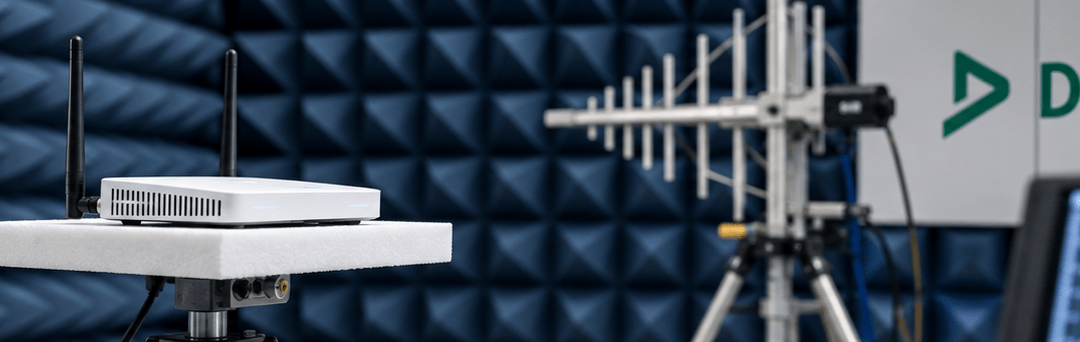
Products that incorporate WiFi, Bluetooth, radio, NFC, UWB or other wireless technologies are subject to specific requirements before being marketed in the European Economic Area.
In these cases, CE marking does not depend solely on electrical safety or general electromagnetic compatibility. When a product transmits or receives radio waves for communication or radiodetermination purposes, it may fall under the scope of the RED Directive , the European regulation governing radio equipment.
For the manufacturer, this means correctly identifying whether the product is affected, what essential requirements it must meet, what tests may be necessary, and what technical documentation it must retain before issuing the EU Declaration of Conformity.
Table of Contents
- Which electrical and electronic products may require CE marking?
- What requirements may apply to these products?
- Standard directives and regulations
- Standard tests for electrical and electronic products
- Required technical documentation
- EU Declaration of Conformity and Labelling
- Common errors in electrical and electronic products
- Checklist before marketing the product
- How DEKRA can help you
- FAQ
1. What is the RED Directive?
The RED Directive, or Radio Equipment Directive 2014/53/EU , establishes the regulatory framework for the marketing of radio equipment in the European Union. Its objective is to ensure that equipment using radio frequencies meets essential requirements related to safety, electromagnetic compatibility, and efficient use of the radio spectrum.
In practice, the RED Directive applies to products that incorporate wireless technologies , whether their main function is communication or connectivity is an additional feature of the product.
This means that an “electrical” or “electronic” product may require a specific assessment under RED if it integrates a WiFi, Bluetooth, radio, NFC, UWB or other wireless technology module.
2. Which products with WiFi or Bluetooth may be affected
The NETWORK Directive applies to a wide variety of connected products. Some common examples are:
- IoT devices;
- smart home products;
- wearables;
- wireless sensors;
- connected industrial equipment;
- routers, gateways and access points;
- radio remote controls;
- devices with Bluetooth Low Energy;
- connected medical devices;
- NFC products;
- location or radiodetermination systems;
- consumer electronics with wireless connectivity;
- products that integrate certified or pre-evaluated radio modules.
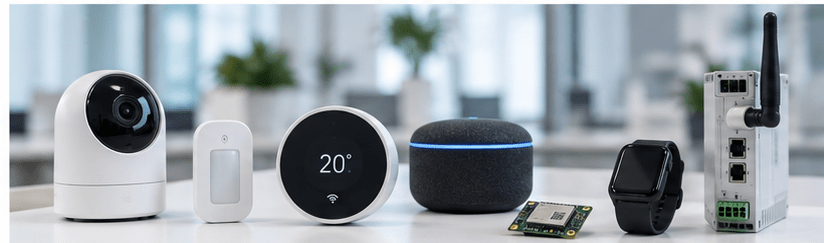
The fact that a product uses a certified radio module does not always mean that the final product is automatically covered. The manufacturer must assess how that module is integrated, what antenna it uses, under what conditions it operates, and whether the complete product maintains compliance.
3. What requirements does the RED Directive demand?
The RED Directive establishes essential requirements that must be met before placing radio equipment on the market. These include protecting the health and safety of people , ensuring an adequate level of electromagnetic compatibility, and making effective and efficient use of the radio spectrum.
In practical terms, this involves reviewing three major areas:
3.1. Security
The product must be safe for people, pets, and property. This may include electrical, thermal, mechanical, or other hazards arising from the intended use of the equipment.
3.2. Electromagnetic compatibility
The equipment must function correctly in its electromagnetic environment, not generate unacceptable disturbances on other equipment, and not be disturbed by other devices.
3.3. Efficient use of the radio spectrum
The equipment must use the spectrum appropriately to avoid harmful interference and allow coexistence with other radio equipment.
In addition, certain categories of radio equipment may be subject to additional requirements, for example in the areas of network protection, privacy, fraud or cybersecurity, where applicable.
4. CE marking on radiofrequency products
When a product falls within the scope of the RED Directive, the manufacturer must follow the relevant conformity assessment procedure before affixing the CE Marking.
This process may include:
- product identification and its intended use;
- analysis of integrated wireless technologies;
- frequency and power band review;
- identification of applicable harmonized standards;
- radiofrequency tests;
- EMC trials;
- security assessment;
- radiofrequency exposure review, when applicable;
- preparation of the technical file;
- issuance of the EU Declaration of Conformity;
- review of labeling and instructions.
The European Commission publishes references to harmonised standards that can be used to demonstrate a presumption of conformity with the essential requirements of the RED Directive , provided that they are applied correctly and published in the Official Journal of the European Union.
5. Standard tests for products with WiFi, Bluetooth or radio
The necessary tests depend on the type of product , wireless technology, frequency bands, power, antenna, usage environment, and applicable standards.
5.1. Radiofrequency tests
They allow you to check if the equipment is using the radio spectrum correctly. They may include:
- transmitted power;
- unwanted emissions;
- bandwidth occupied;
- frequency stability;
- receptor sensitivity;
- behavior in specific bands;
- coexistence with other teams;
- antenna performance;
- specific parameters according to WiFi, Bluetooth, NFC, UWB or other technology.
5.2. EMC Trials
Products with radio capabilities must also meet electromagnetic compatibility requirements. This involves verifying that the equipment does not generate excessive interference and can function properly in the presence of external disturbances.
5.3. Safety tests
Electrical, thermal, mechanical, battery, charger, power supply or foreseeable conditions of use risks are evaluated.
5.4. Radiofrequency exposure assessment
The exposure of people to electromagnetic fields is assessed, especially when the device is used close to the body or under specific proximity conditions.
5.5. Additional tests
Depending on the product, they may also apply environmental, reliability, battery, software, cybersecurity tests or specific customer or market requirements.
6. Technical documentation and EU Declaration of Conformity
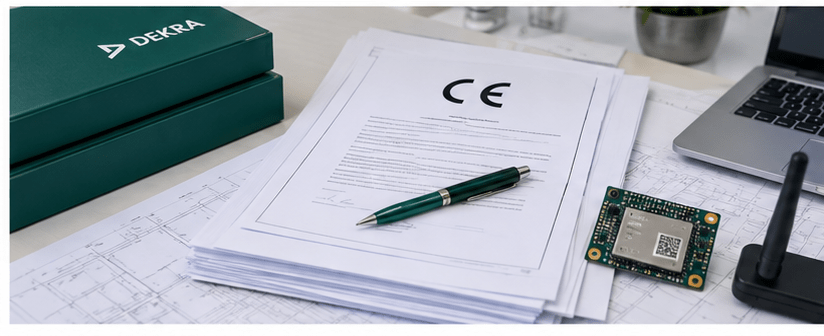
The manufacturer must retain technical documentation demonstrating that the product meets applicable requirements . For products with Wi-Fi, Bluetooth, or radio, this documentation typically includes information on design, radio module integration, antenna, software, applicable standards, test reports, risk assessment, manuals, and labeling.
The RED Directive requires that technical documentation contain the information necessary to assess the conformity of radio equipment with the essential requirements. It must also include a proper risk analysis and assessment.
The EU Declaration of Conformity must be aligned with the technical file and accurately reflect the applicable legislation, standards used, and product data. If harmonized standards have been applied only partially or not at all, the technical solution used to demonstrate conformity must be justified. This declaration must accompany the product when it is placed on the market; a simplified Declaration of Conformity is also an option.
7. When can a notified body intervene?
Not all products with WiFi or Bluetooth require a notified body. In some cases, the manufacturer can apply harmonized standards and follow the corresponding conformity assessment procedure without third-party involvement, provided that the legislation allows it.
However, it may be necessary to use a notified body when:
- There are no harmonized standards applicable to all requirements;
- Harmonized standards are not fully applied;
- the chosen or required conformity assessment procedure requires a third party;
- There are technical doubts about the demonstration of conformity;
- The product features complex radio characteristics or specific usage scenarios.
The decision must be reviewed product by product and documented within the technical file.
8. Common errors in connected products
• Assume that the radio module already covers the entire product
A pre-certified module helps, but the final integration can alter the product's radioelectric, EMC, or safety characteristics. Therefore, the conformity of the entire product must be assessed.
· Do not check the antenna
Changes to antenna, location, gain, wiring, or housing can affect emissions, performance, and compliance.
· Ignore the firmware or radio settings
The product configuration during testing should reflect actual usage. Changes in power, channels, operating modes, or firmware may affect the results.
· Forget EMC or safety
A radio-enabled product must not only meet radio requirements. Safety, electromagnetic compatibility, and other applicable requirements must also be considered, as these are essential requirements of the directive.
• Failure to update technical documentation
If the module, antenna, housing, firmware, power supply or intended use changes, it may be necessary to review tests and documentation.
• Using outdated standards
Harmonized standards are a living document and are reviewed periodically. It is important to check the harmonized version in the lists published in the Official Journal of the European Union.
9. Checklist before marketing a product with radio
Before placing the CE Marking on a product with WiFi, Bluetooth or radio, it is advisable to check:
- type of product and intended use;
- integrated wireless technology;
- frequency bands used;
- transmission power;
- antenna type and location;
- hardware version;
- software or firmware version;
- integrated radio modules;
- accessories, cables or power supplies;
- applicable harmonized standards;
- radio tests required;
- EMC trials;
- security assessment;
- exposure to radiofrequency, if applicable;
- technical documentation;
- EU Declaration of Conformity;
- manuals, warnings and instructions;
- labeling and traceability;
- need for a notified body or not.
This checklist should be tailored to each product. An industrial sensor, a wearable, a router, a connected light fixture, or a Bluetooth medical device may have very different requirements and additional regulations that they must comply with.
10. How DEKRA can help you
DEKRA assists manufacturers, importers and distributors in CE Marking and international certification processes for products with WiFi, Bluetooth, radio and IoT, from identifying requirements to conducting tests and reviewing documentation.
The support may include:

- initial product analysis;
- identification of NETWORK requirements;
- review of applicable harmonized standards;
- definition of the test plan;
- radiofrequency tests;
- EMC trials;
- safety tests;
- radiofrequency exposure assessment, when applicable;
- review of technical documentation;
- guidance on EU Declaration of Conformity;
- support in labeling, instructions and traceability;
- support to assess whether a notified body can intervene.
11. Frequently Asked Questions about the RED Directive and CE Marking
It is the European legislation that regulates the marketing of radio equipment and establishes essential requirements for safety, electromagnetic compatibility and efficient use of the radio spectrum.
Yes, if a product has Bluetooth and is marketed in the European Union, the RED Directive applies to it and, therefore, the CE Marking.
Yes, products that integrate WiFi are within the scope of the NETWORK Directive.
It is highly recommended, but does not cover the final product. The integration of the module, antenna, housing, firmware, and intended use may affect compliance.
It requires radiofrequency, EMC, safety, and radiofrequency exposure testing. Additionally, depending on the product type, other regulations and testing requirements may apply, such as RoHS, energy efficiency, machinery regulations, toy safety, medical device safety, etc.
Not always. It depends on the applicable harmonized standards, the conformity assessment procedure, and the characteristics of the product and the communications module and its integration.
You must keep technical documentation (construction technical file) that supports conformity, including product description, applicable standards, test reports, risk assessment, manuals, labelling and EU Declaration of Conformity.
Other articles of interest to you
- Does the CE certificate exist? Differences between a certificate, CE marking, and the EU Declaration of Conformity
 When a company wants to market a product in Europe, it is… Read moreDoes the CE certificate exist? Differences between a certificate, CE marking, and the EU Declaration of Conformity
- EMC testing for CE marking. When is it necessary and what is evaluated?
 EMC testing for CE marking allows verification that a… Read moreEMC testing for CE marking: When it is required and what is evaluated
- RED Directive and CE Marking for products with WiFi or Bluetooth
 Products that incorporate WiFi, Bluetooth, radio, NFC, UWB or… Read moreRED Directive and CE Marking for products with WiFi or Bluetooth